Micromouse
We started with an idea. We ended with a real competition.
- Bootcamp began
- 19 August 2026
- Competition day
- 21 September 2026
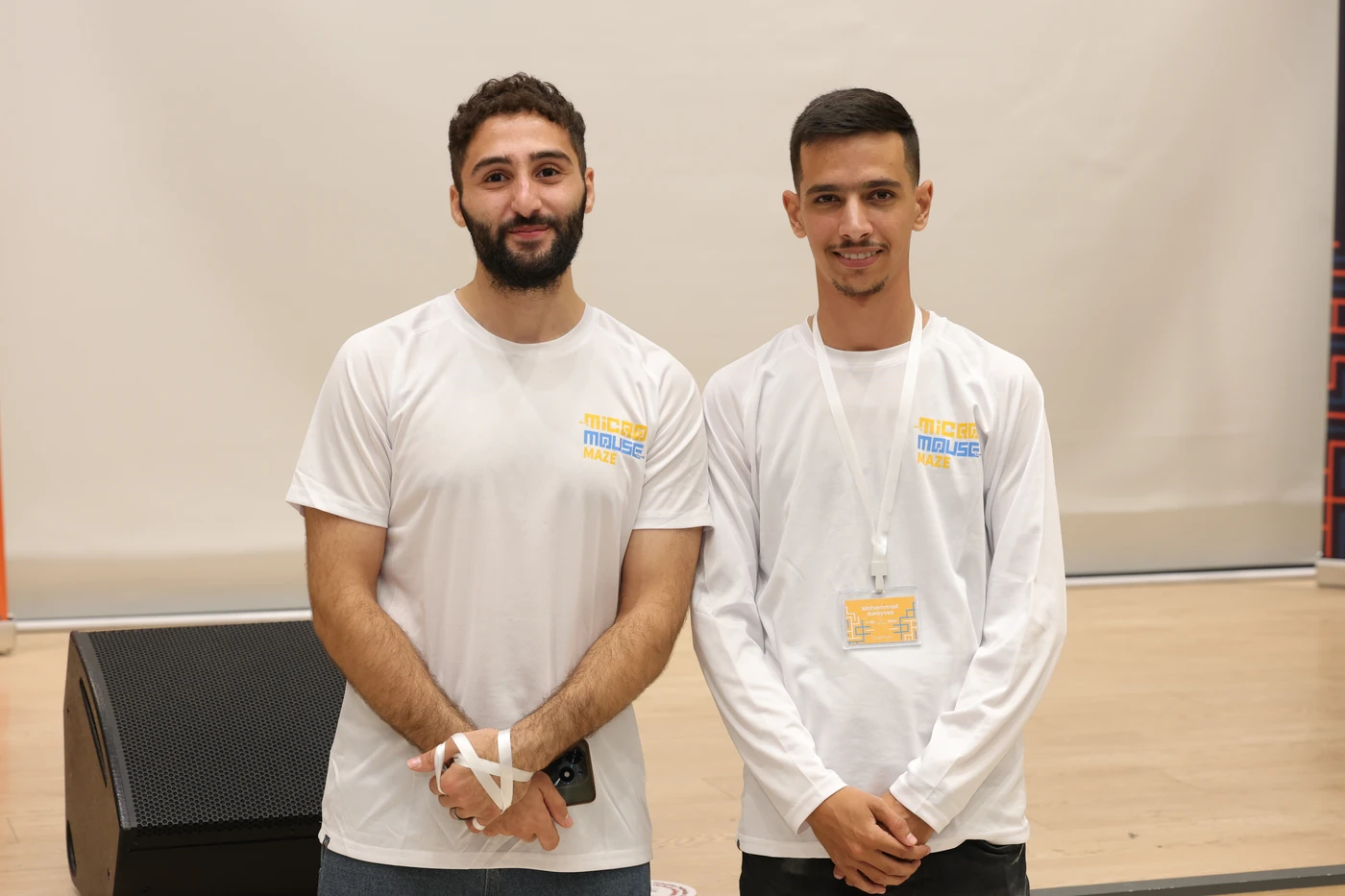
“Why don’t we make one?”
In early September 2025, at the beginning of my fourth year, a few friends and I watched videos of Micromouse competitions. We loved the idea and wanted to bring it to our university. None of us had worked on a real hardware project like this; one teammate had some Arduino basics.
We began with a car kit from the university. After figuring out its motors and sensors, we made it move until it detected a wall and stopped. It was a small result, but seeing a real machine respond to our work was a first for us.
The first kit got us moving. Then we needed feedback.
That car was too large, and its basic motors could not tell us how far they had moved. We researched other hardware, but many of the parts and ready-made boards we found were difficult to get into Palestine.
Searching locally led us to the MiniD Mouse Maze Robot Kit with an MPU6050, motor encoders and laser/IR sensors. We ordered one in November 2025 and started learning how to read the sensors, measure movement and control the motors with PID.
After plenty of testing, mistakes and some burned components, we had a working wall-following robot. The hardware team learned and worked through these problems together.
Before improving the robot, fix the test environment.
By late December, we noticed that every test used a different makeshift maze. Random materials and changing wall dimensions meant the robot behaved differently each time. We needed a consistent place to test.
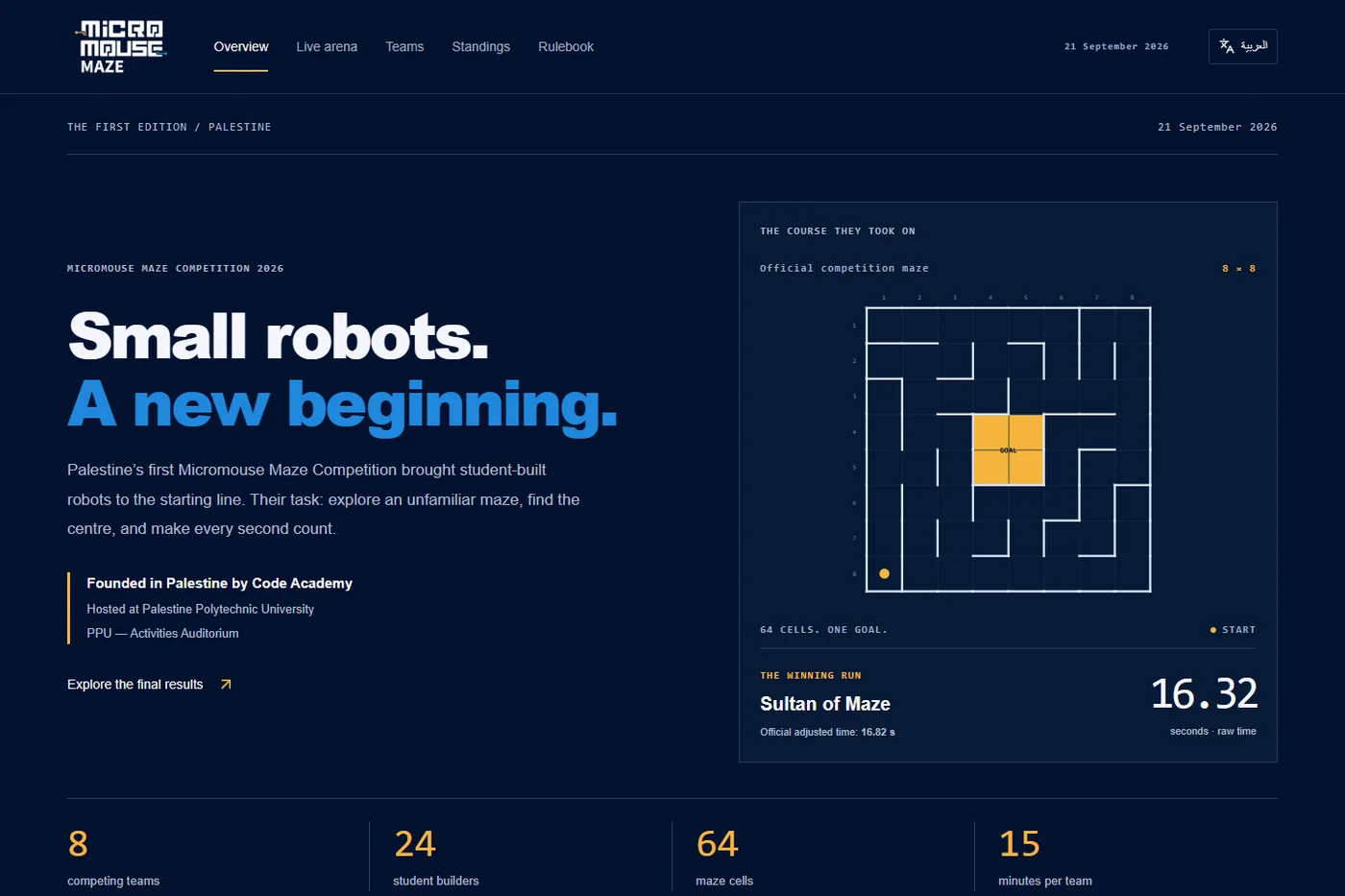
The standard 18 cm cells left little room for our roughly 16 cm-wide kit. We designed an 8 × 8 maze with 24 cm cells to suit the hardware we could actually obtain.
Funding took longer than we expected. Building the maze cost more than we could afford as students, and at times we considered stopping. By June 2026, we had secured support, built the maze and bought 10 robot kits for the bootcamp. While waiting, we had been preparing the teaching material.
Learning it ourselves was only half the work.
The bootcamp began on 19 August 2026, after summer finals and before the next semester. About two weeks of sessions were followed by almost daily follow-up with students until just before the competition on 21 September.
This was my first time teaching a bootcamp. Preparing material, planning sessions and working with students added a completely new responsibility: helping someone else understand what we had only recently learned ourselves.
We had started by trying to build one robot. Now we were helping other students get their first practical experience with robotics.
- ESP32 fundamentals
- I introduced the ESP32 fundamentals in session 2. A teammate continued with communication protocols.
- IR sensors
- In session 3, I covered infrared sensors as part of the team's wider sensor session.
- Motors & gear ratios
- In session 4, I explained how motors work and how gear ratios affect movement.
- Debugging over Bluetooth
- I taught Bluetooth debugging for the robot in session 6.
- From wall following to flood fill
- For algorithms, I started with our maze, introduced simple wall following, then explained flood fill.
Eight teams. Every one reached the center.
On 21 September 2026, all eight teams solved the maze and reached the center. The fastest run took 15.42 seconds; after collision penalties, the winning result was 16.82 seconds.
I also built the event website with Codex to display the teams and maze and record their times. It was a practical tool for the competition we had spent almost a year preparing.
For me, the result was bigger than a fast robot. We had started without hardware-project experience and ended up organizing Palestine’s first Micromouse competition, teaching others and seeing every team finish.
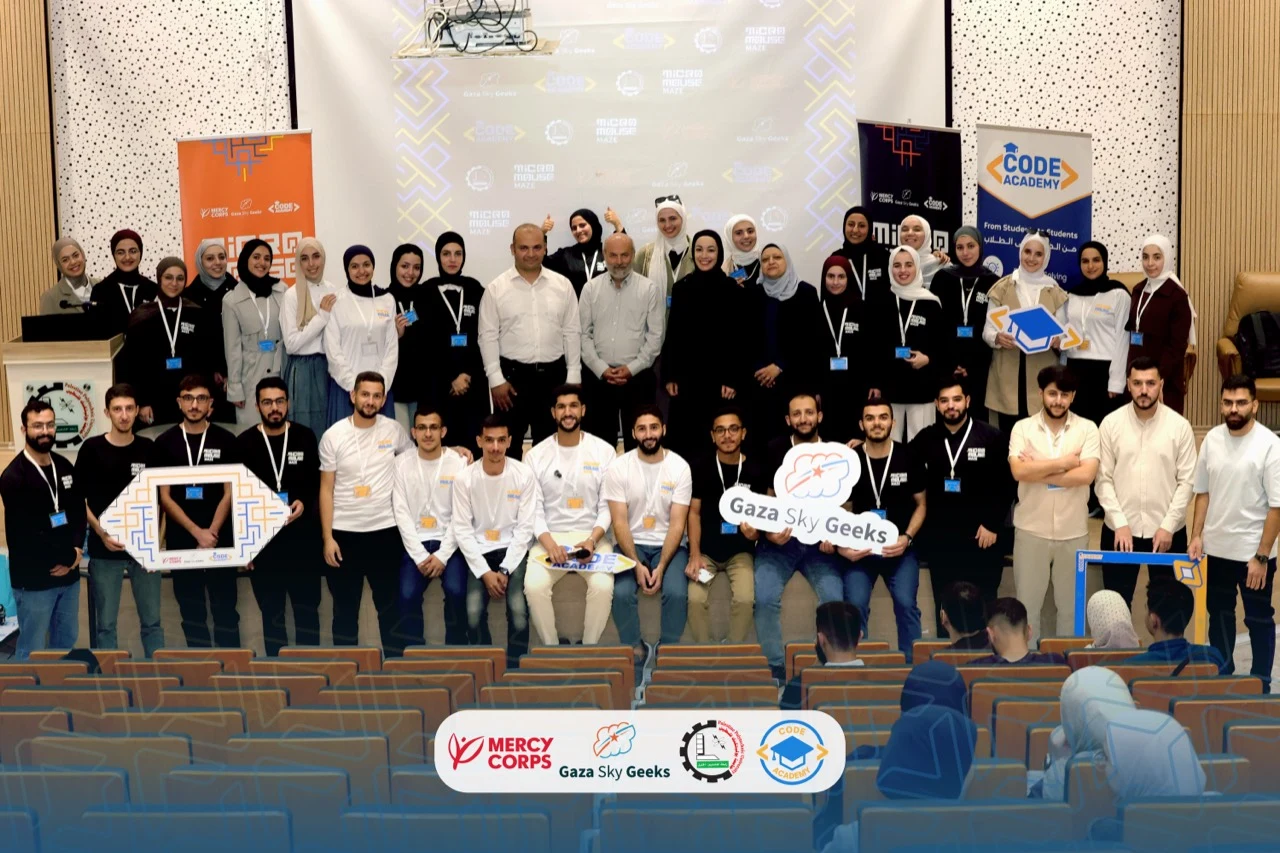
See how it came together.
The documentary tells the story of the competition. The full runs recording lets you follow the robots through the maze on competition day. Select a video to watch here, or open it on YouTube.
Micromouse documentary
The story behind Micromouse.
Open on YouTube: Micromouse documentary (opens in a new tab)Full competition runs
The competition, run by run.
Open on YouTube: Full competition runs (opens in a new tab)Tools & context
- MiniD Mouse Maze Robot Kit
- Encoders & laser/IR sensors
- PID motor control
- Wall following
- Flood fill
- ESP32 & Bluetooth debugging
- Teaching
- Codex-assisted web development
The people behind it.
Thank you to our hardware team, the people who supported the competition, and every student who took part and kept working on their robot.
- Qusai Sallhab (opens in a new tab) — Hardware team
- Husam Essa (opens in a new tab) — Hardware team
- Majd Tamimi (opens in a new tab) — Hardware team
- Rand Haymouni (opens in a new tab) — Hardware team
- Code Academy (opens in a new tab) — University club
- Gaza Sky Geeks (opens in a new tab) — Sponsor
- Dr. Wael Al Takrouri (opens in a new tab) — Supported us from the beginning